 Start/Stop/Continue
 Start/Stop/Continue
This activity offers a very classic retrospective format which remains effective. Based on facts, this retrospective attempts to answer 3 questions: What should we start doing? What should we stop doing? What should we continue to do?
Use this template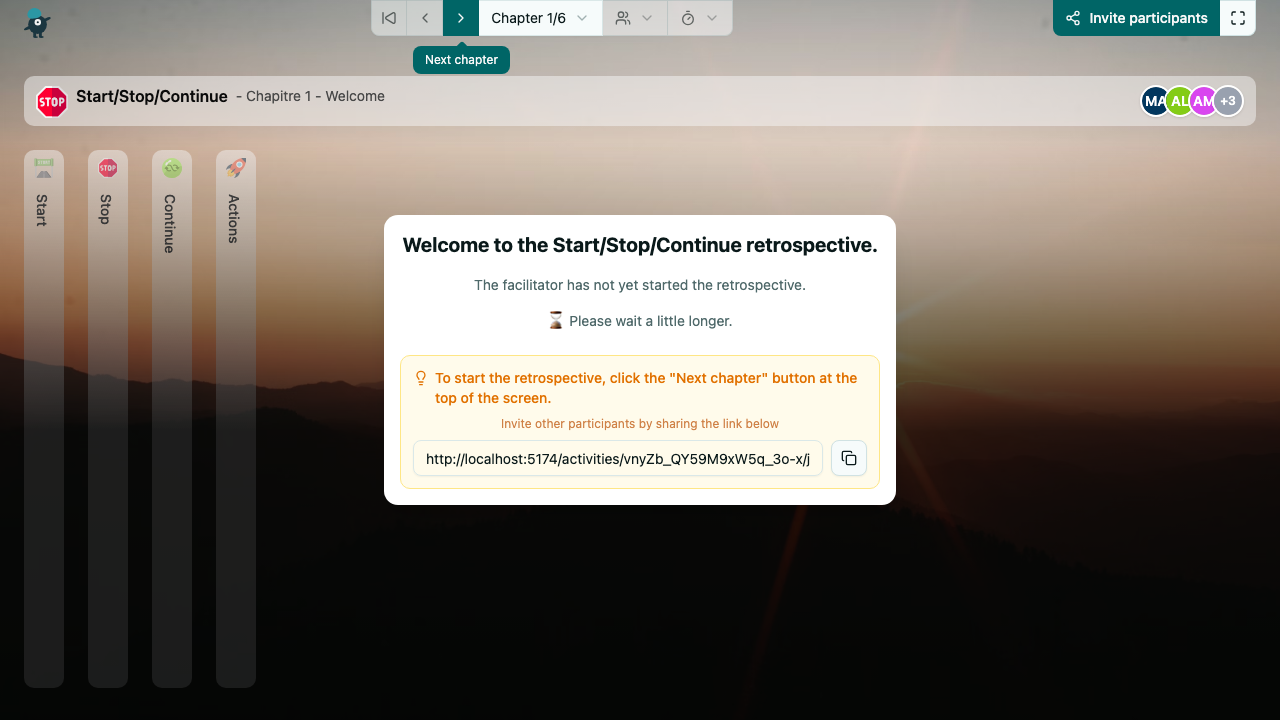
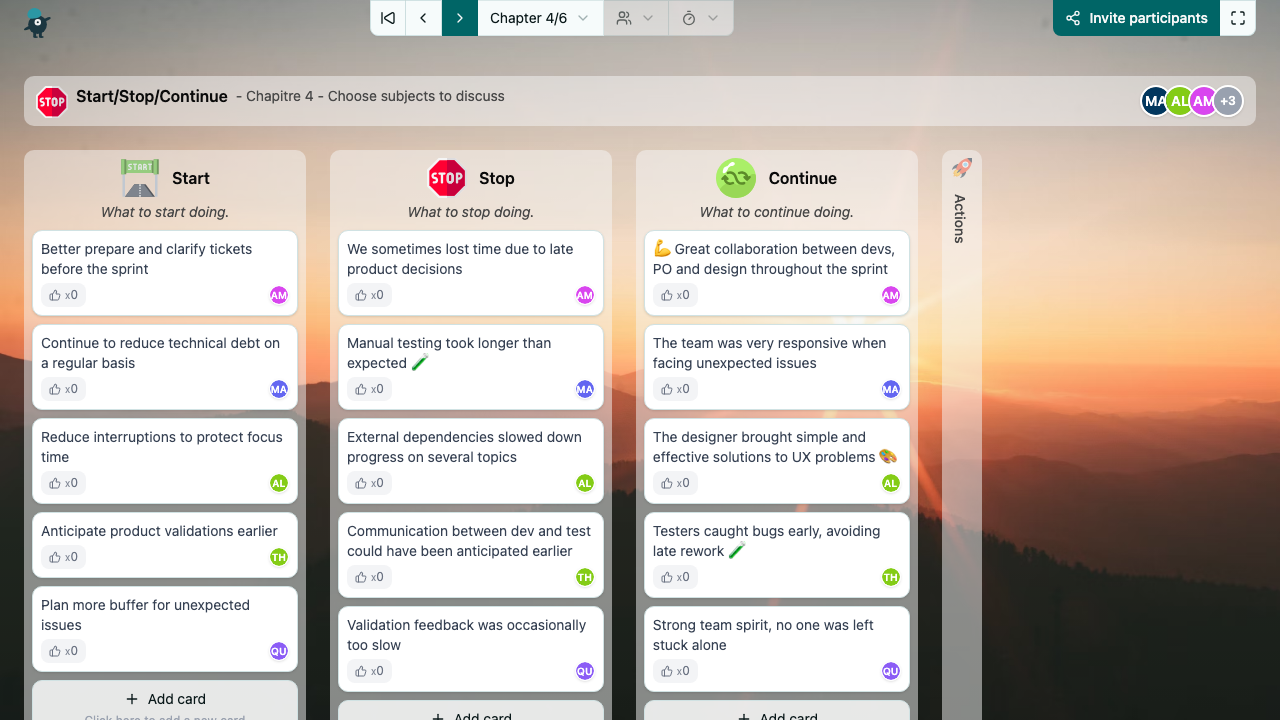
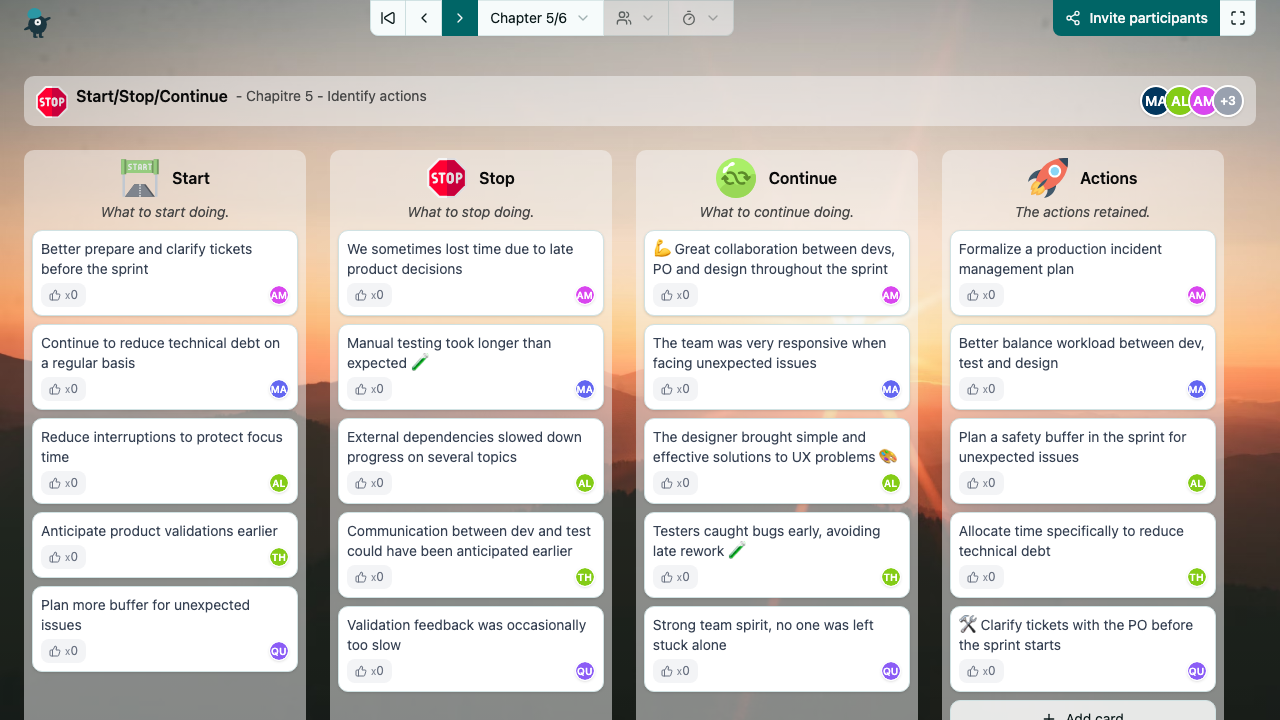
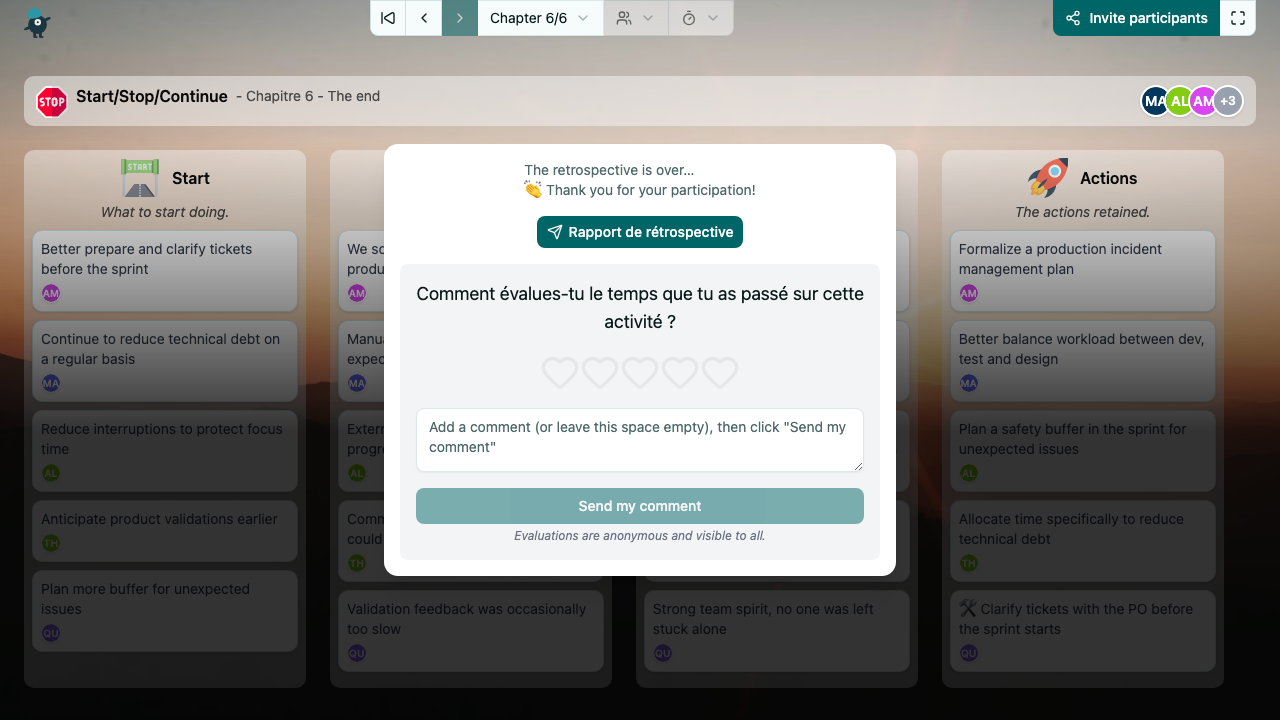
Start/Stop/Continue is one of the most classic and enduring retrospective formats in agile methodology. Its strength lies in its simplicity: three straightforward questions that any team can immediately understand and engage with.
The format is based on facts and focuses on answering three essential questions:
- Start 🟢: What should we start doing? New practices, processes, or behaviors that the team believes would be beneficial.
- Stop 🔴: What should we stop doing? Activities, habits, or processes that aren't working, waste time, or create friction.
- Continue 🔵: What should we continue doing? Practices that are working well and should be maintained.
The beauty of Start/Stop/Continue is that it forces a balanced conversation: the team must identify both things to change and things to preserve. The "Continue" column is often underappreciated but is crucial - it ensures the team doesn't lose sight of what's already working while pursuing improvements.
This format is particularly well-suited for:
- Teams new to retrospectives, as it's immediately intuitive
- Time-constrained sessions, as the structure keeps discussion focused
- Regular sprint retrospectives where consistency and simplicity are valued
Despite its simplicity, this format remains remarkably effective. The constraint of categorizing every insight into one of three actionable buckets naturally drives the conversation toward concrete outcomes rather than abstract discussion.
Columns

Start
What to start doing.

Stop
What to stop doing.

Continue
What to continue doing.

Actions
The actions retained.
Similar templates
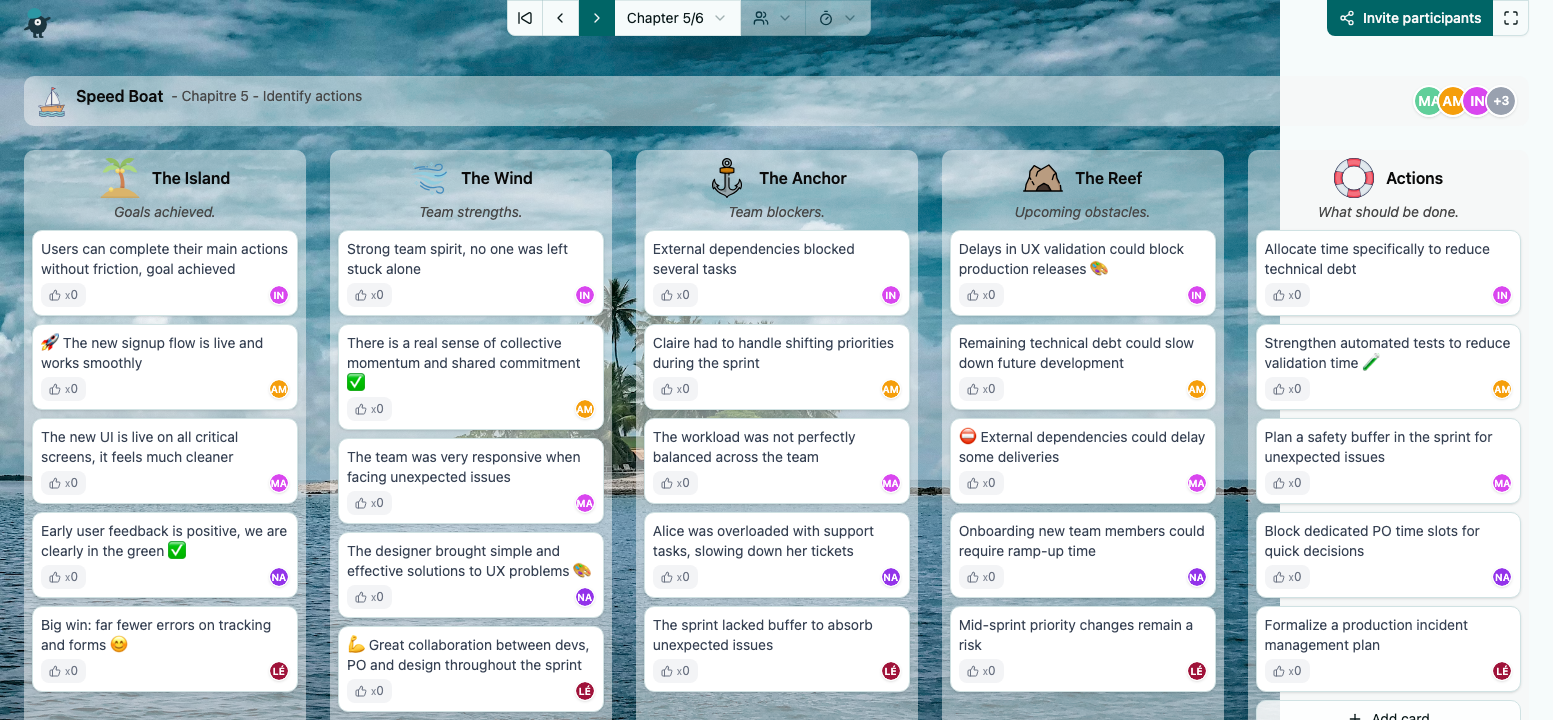

Speed Boat
One of the most popular retrospective formats. First published by Luke Hofmann in 2006 with the book Innovation Games: Creating Breakthrough Products Through Collaborative Play.
Discover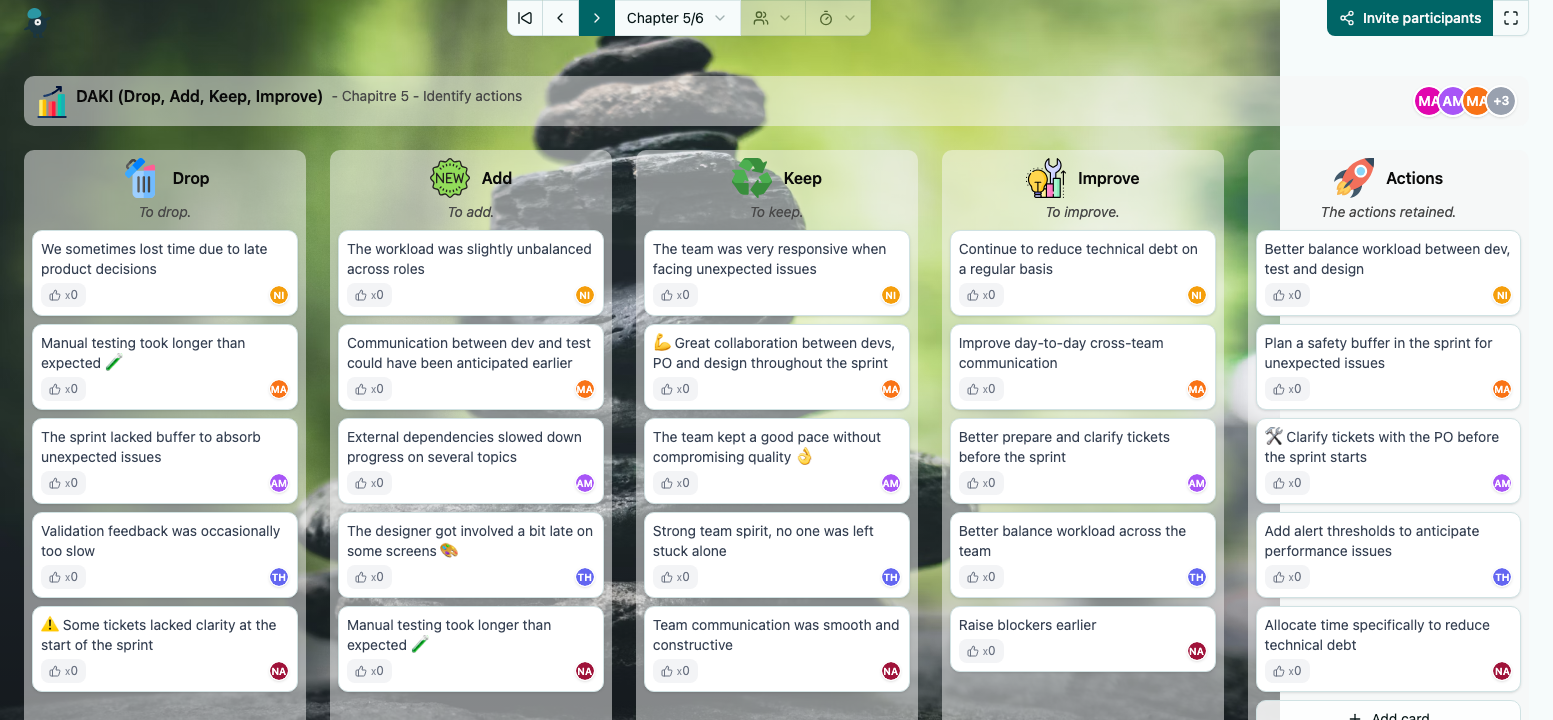

DAKI (Drop, Add, Keep, Improve)
DAKI is a classic retrospective format that fosters reflection on team practices and values. This format is recommended after the team has practiced scrum for several sprints. The team will then be better able to propose relevant changes.
Discover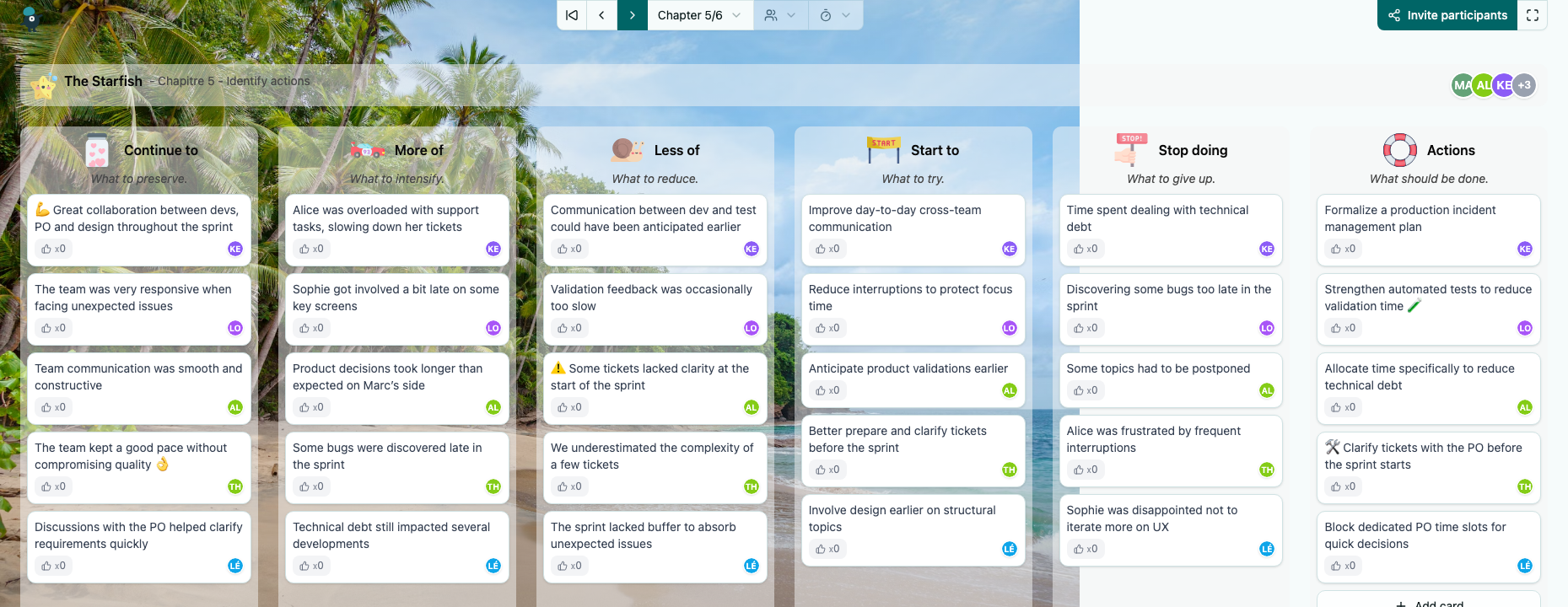

The Starfish
The starfish retrospective is based on the image of this marine animal with 5 arms, representing the 5 themes analyzed by participants during the workshop.
DiscoverReady to transform your retrospectives?
Try Umbreon free for 7 days. No commitment.
Start free trial