 Original 4
 Original 4
Simple and accessible, this retrospective format revolves around the 4 questions that should be asked during a retrospective according to Norman Keth, considered by many to be the inventor of the retrospective.
Use this template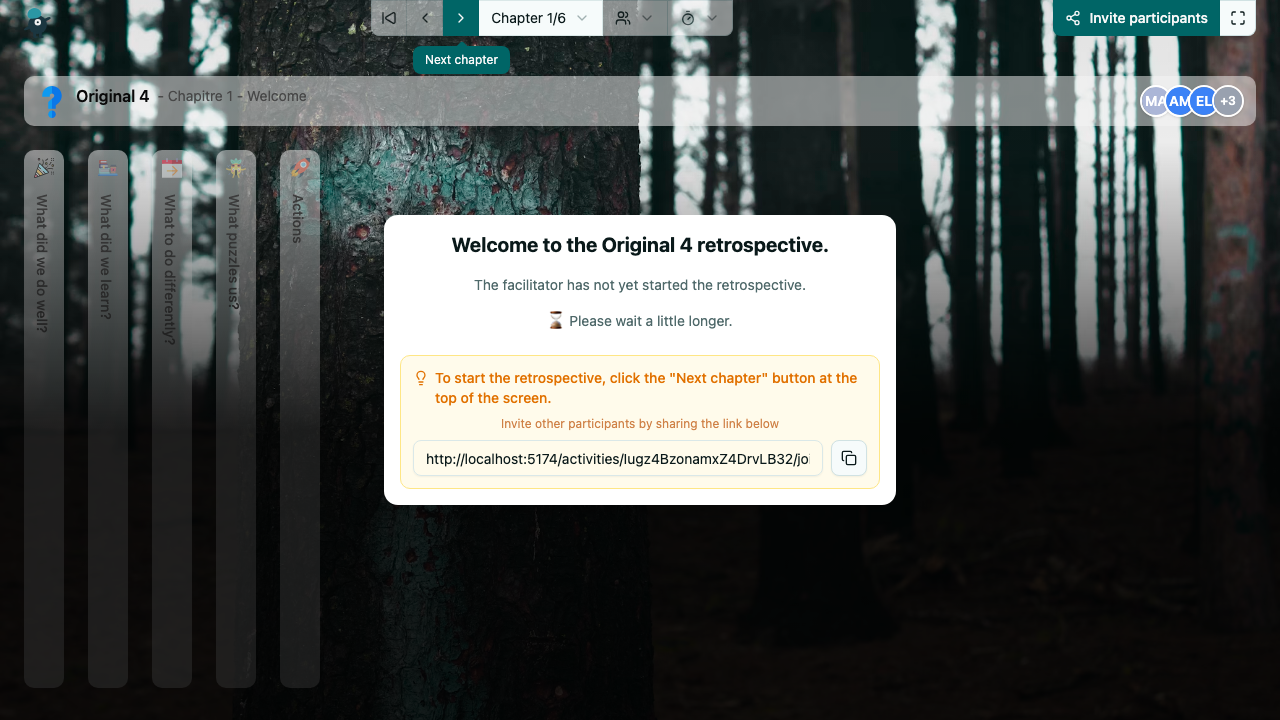
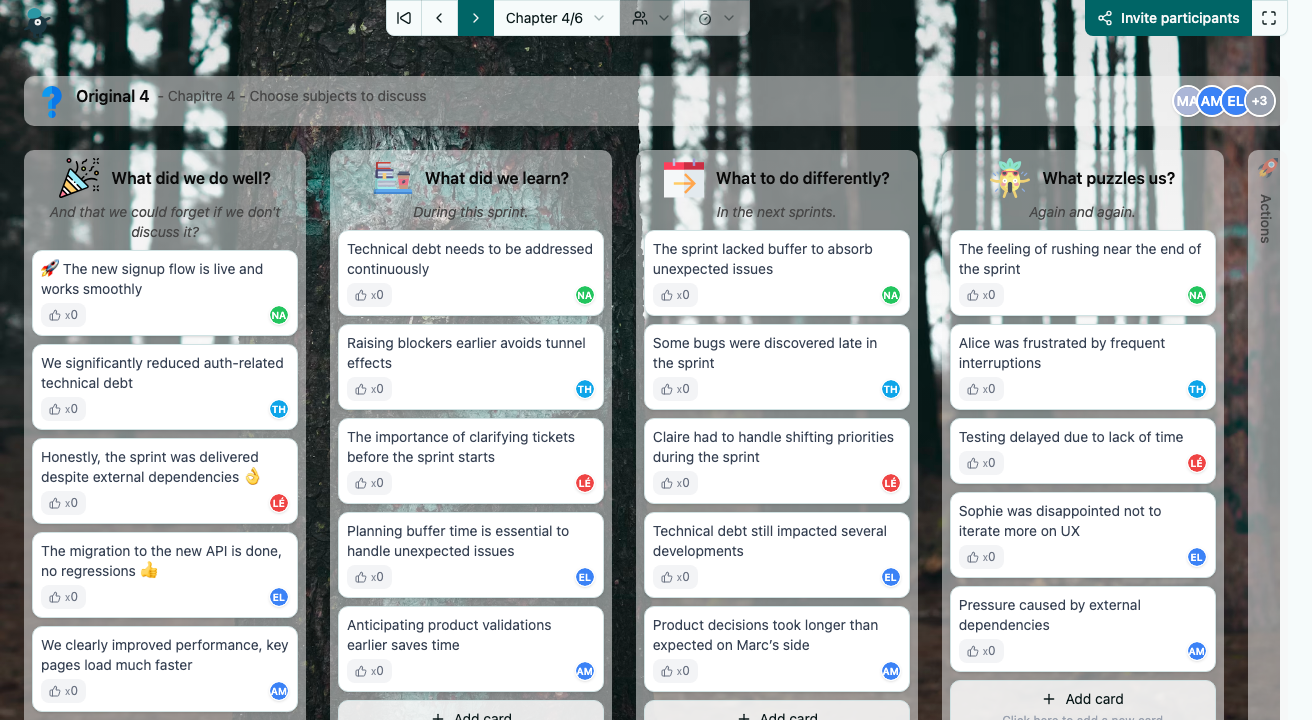
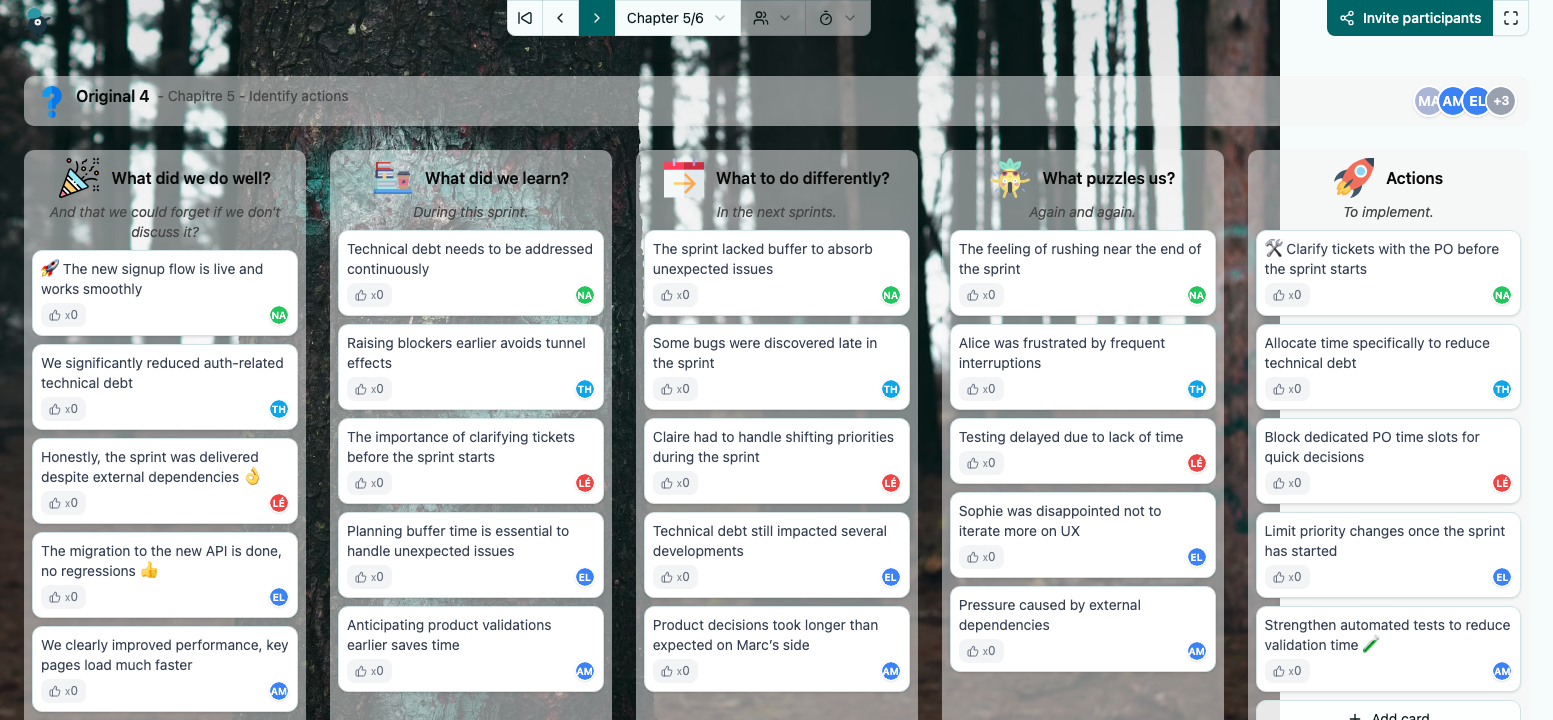
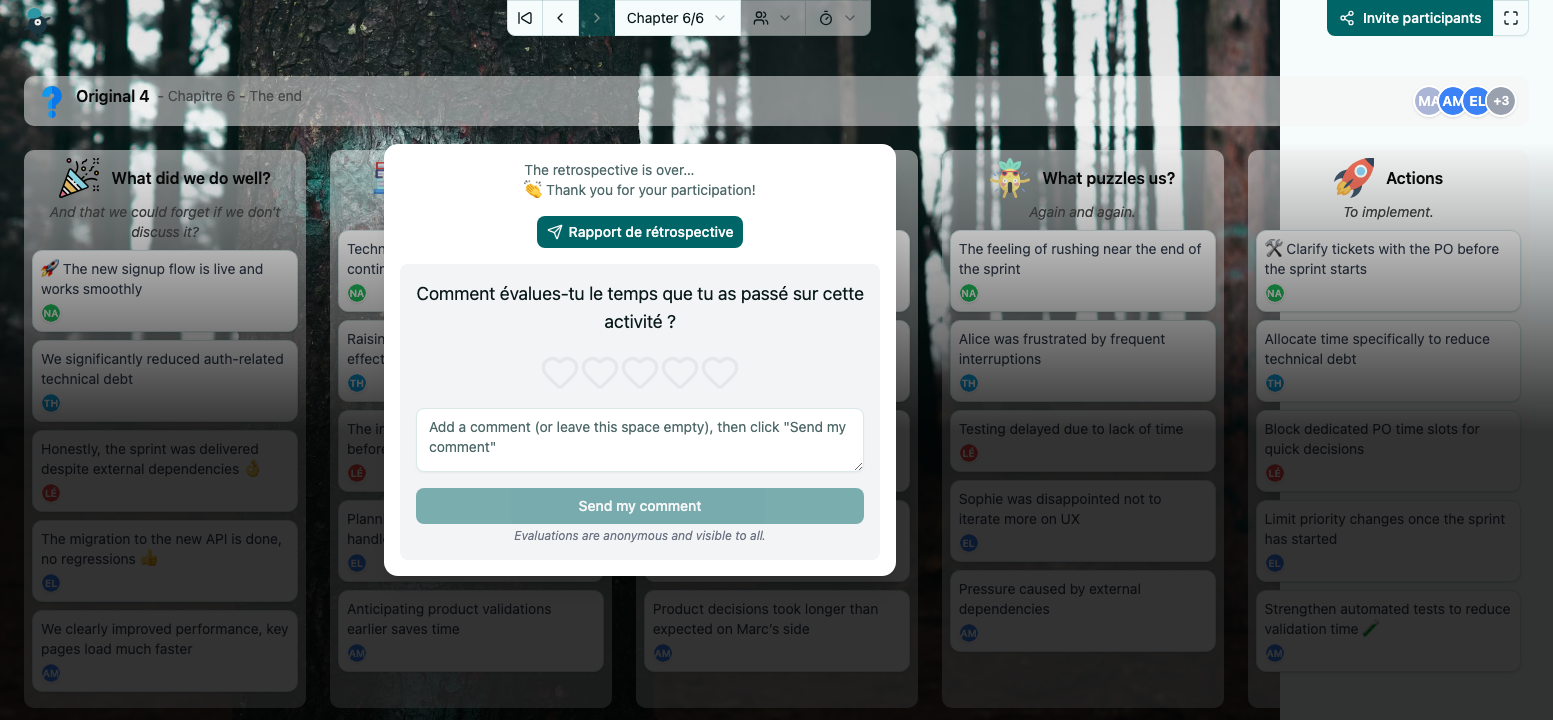
The Original 4 format is based on the four fundamental questions proposed by Norman Kerth, widely regarded as one of the pioneers of agile retrospectives. Published in his book Project Retrospectives: A Handbook for Team Reviews (2001), these questions form the foundation of many retrospective practices.
The four questions are:
- What did we do well? And that we might forget if we don't discuss it. This highlights positive practices worth preserving.
- What did we learn? During this sprint. Knowledge gained through experience that the team should retain.
- What should we do differently? In the next sprints. Concrete changes that could improve the team's effectiveness.
- What still puzzles us? Questions or concerns that remain unresolved and deserve further investigation.
This format is particularly valuable because it balances positive reflection with problem-solving. The fourth question - "What still puzzles us?" - is unique and powerful: it gives space for uncertainties and unanswered questions, encouraging curiosity rather than forcing premature conclusions.
Ideal for teams at any maturity level, this format works well as a regular retrospective practice due to its simplicity and depth.
Columns

What did we do well?
And that we could forget if we don't discuss it?

What did we learn?
During this sprint.

What to do differently?
In the next sprints.

What puzzles us?
Again and again.

Actions
To implement.
Similar templates
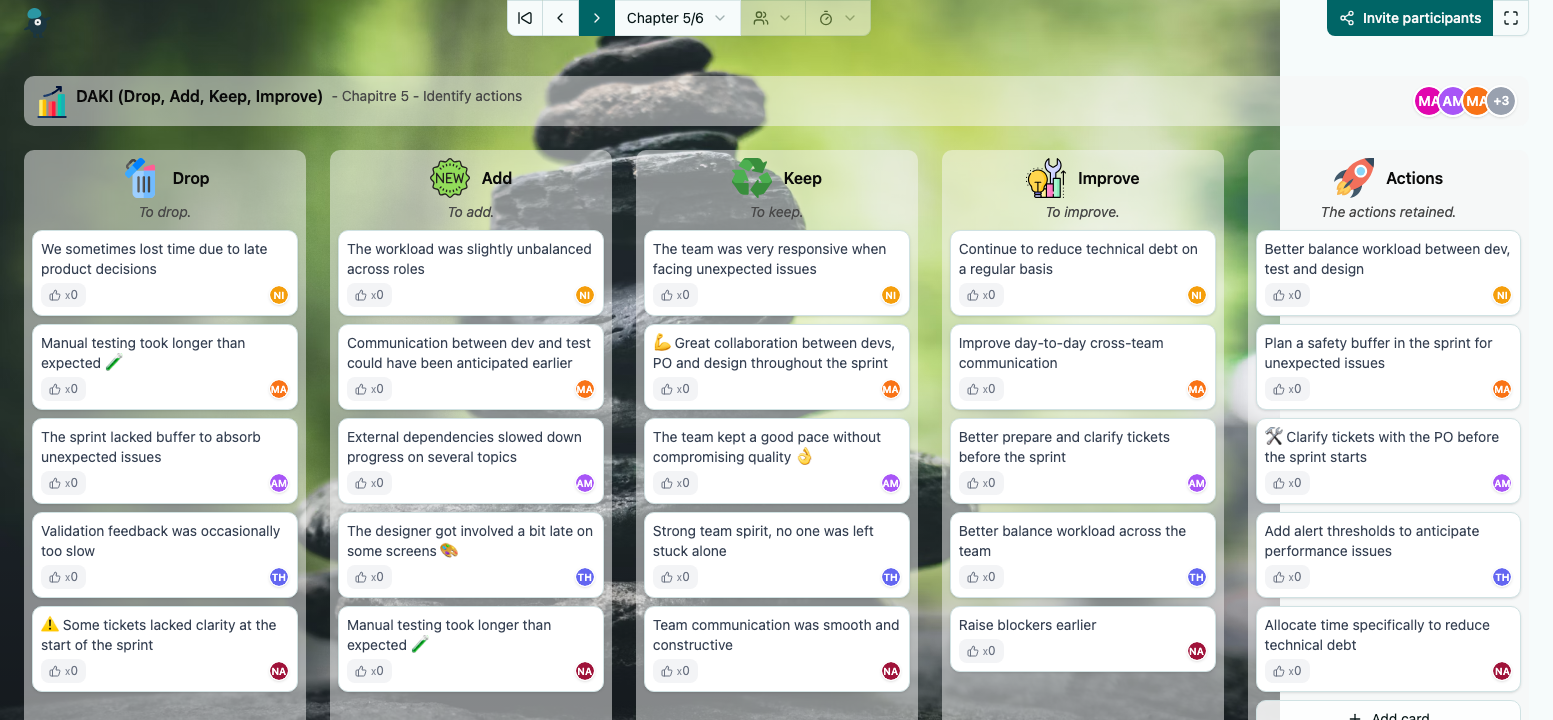

DAKI (Drop, Add, Keep, Improve)
DAKI is a classic retrospective format that fosters reflection on team practices and values. This format is recommended after the team has practiced scrum for several sprints. The team will then be better able to propose relevant changes.
Discover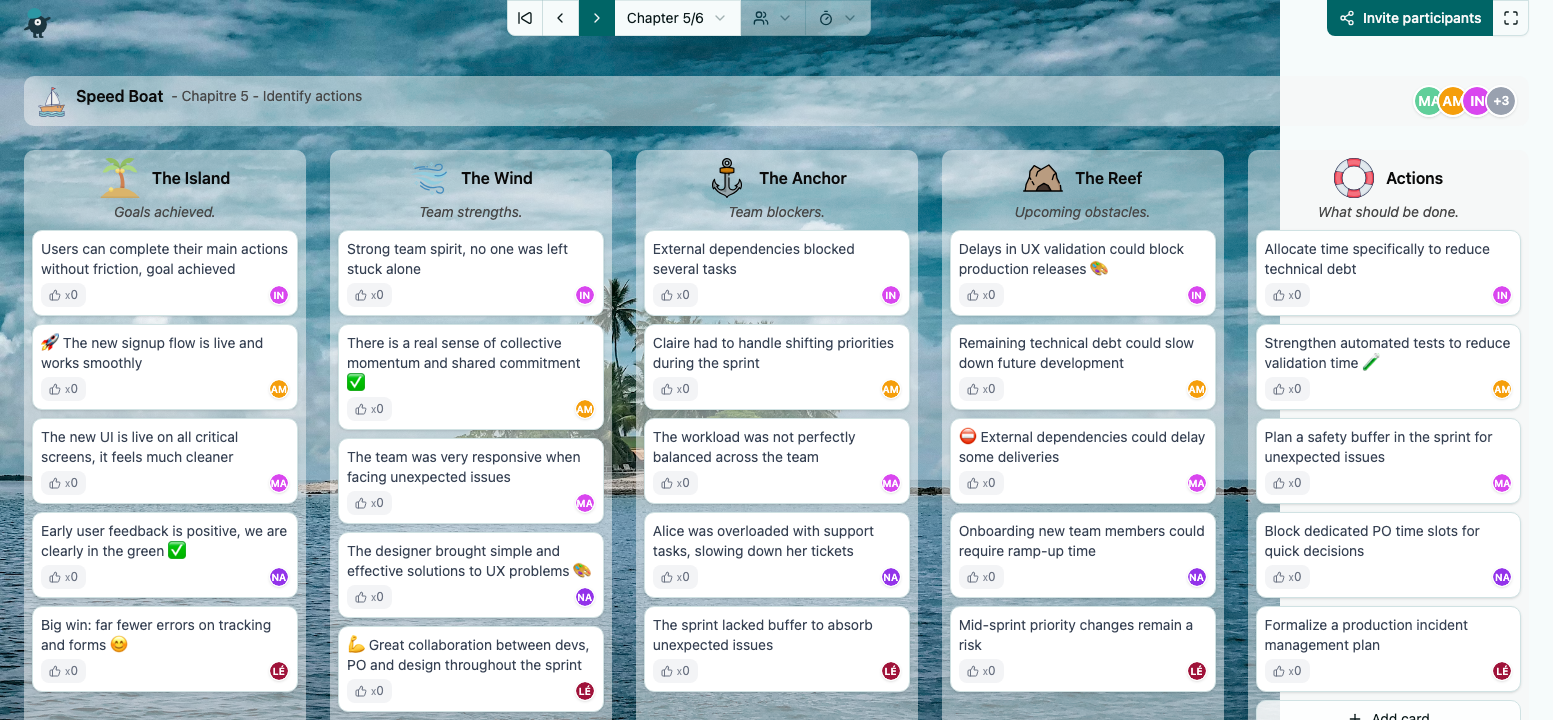

Speed Boat
One of the most popular retrospective formats. First published by Luke Hofmann in 2006 with the book Innovation Games: Creating Breakthrough Products Through Collaborative Play.
Discover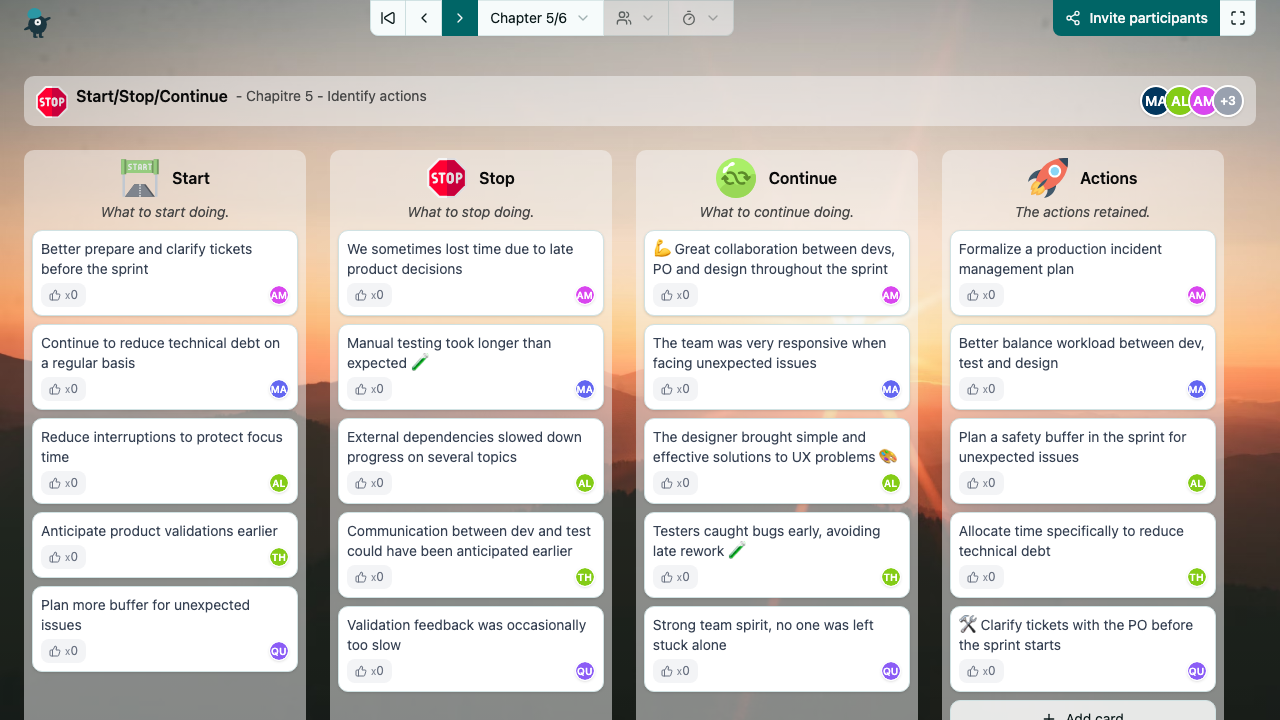

Start/Stop/Continue
This activity offers a very classic retrospective format which remains effective. Based on facts, this retrospective attempts to answer 3 questions: What should we start doing? What should we stop doing? What should we continue to do?
DiscoverReady to transform your retrospectives?
Try Umbreon free for 7 days. No commitment.
Start free trial