 3 cats retro (Glad, Sad, Mad)
 3 cats retro (Glad, Sad, Mad)
This workshop is a classic of retrospective formats. It highlights areas for improvement as a team. Three columns are displayed and allow participants to report what made them happy, sad or what annoyed them during the sprint.
Use this template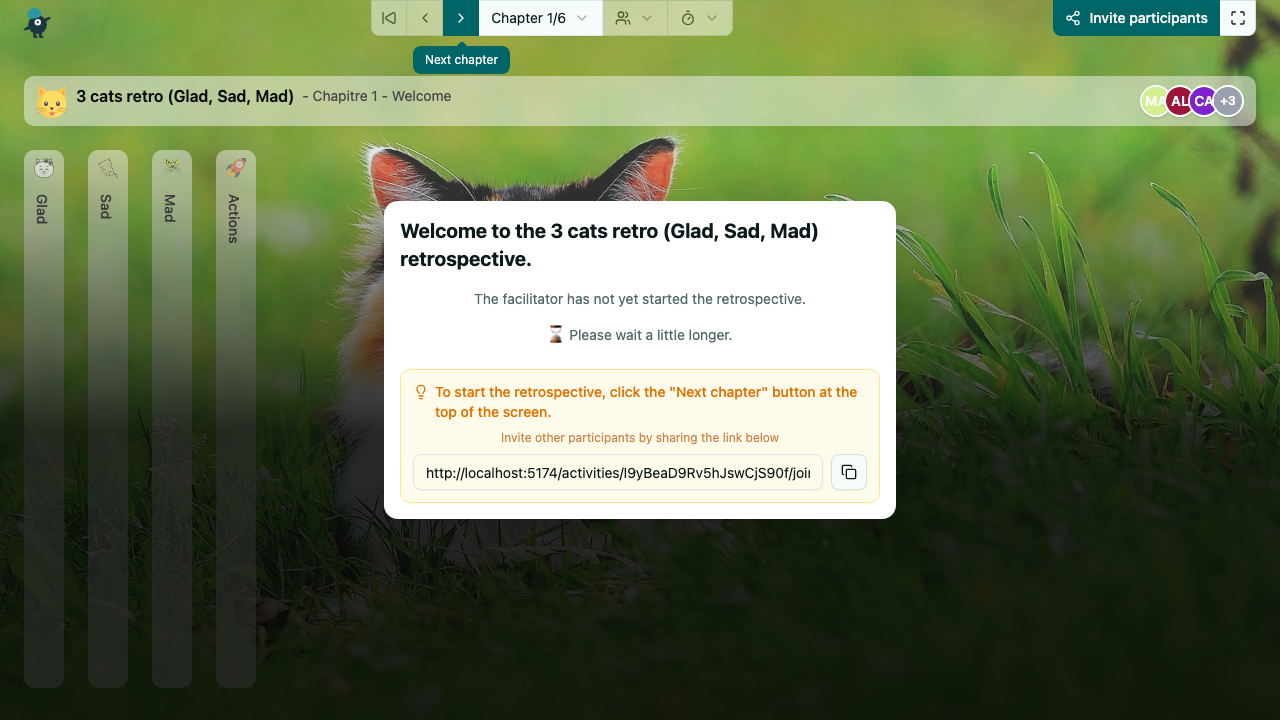
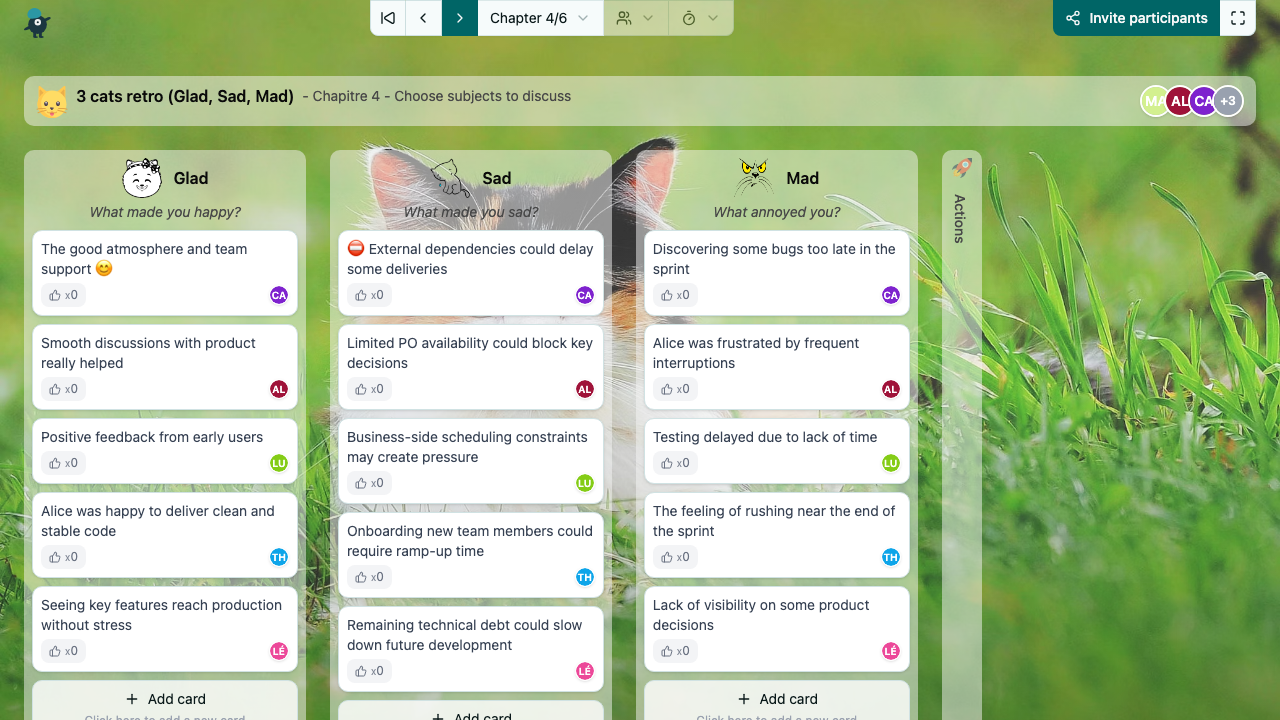
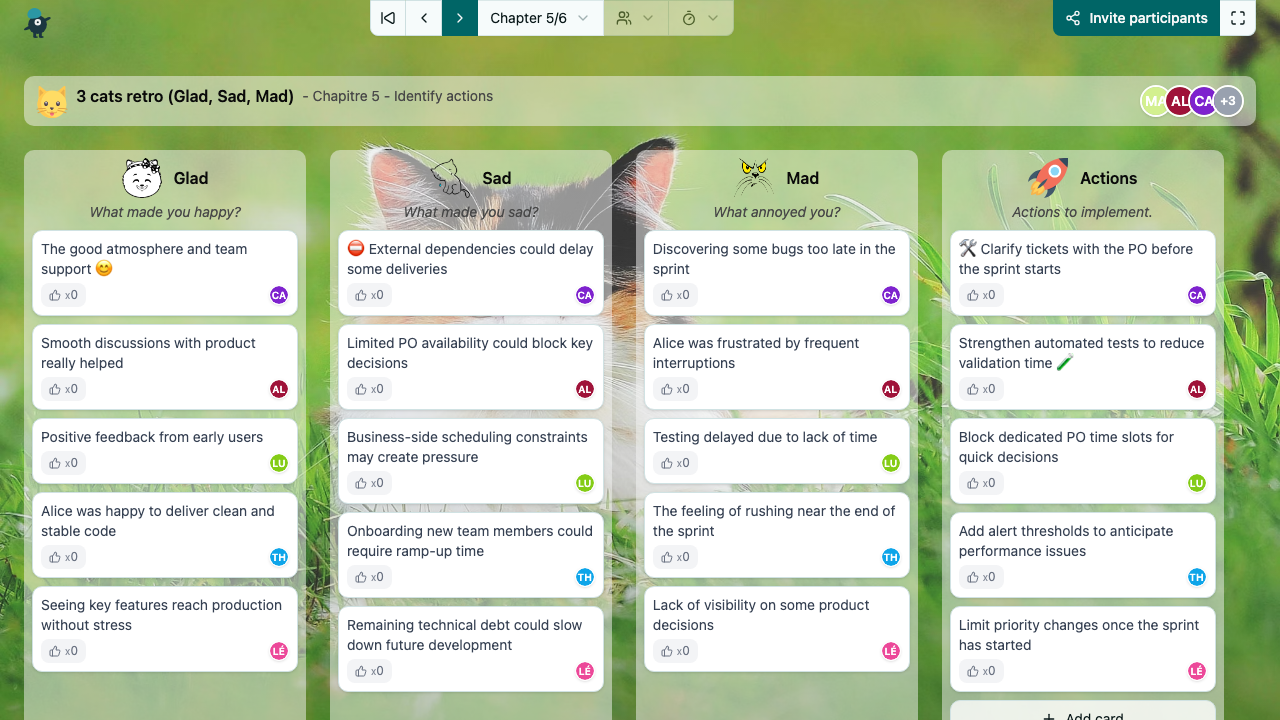
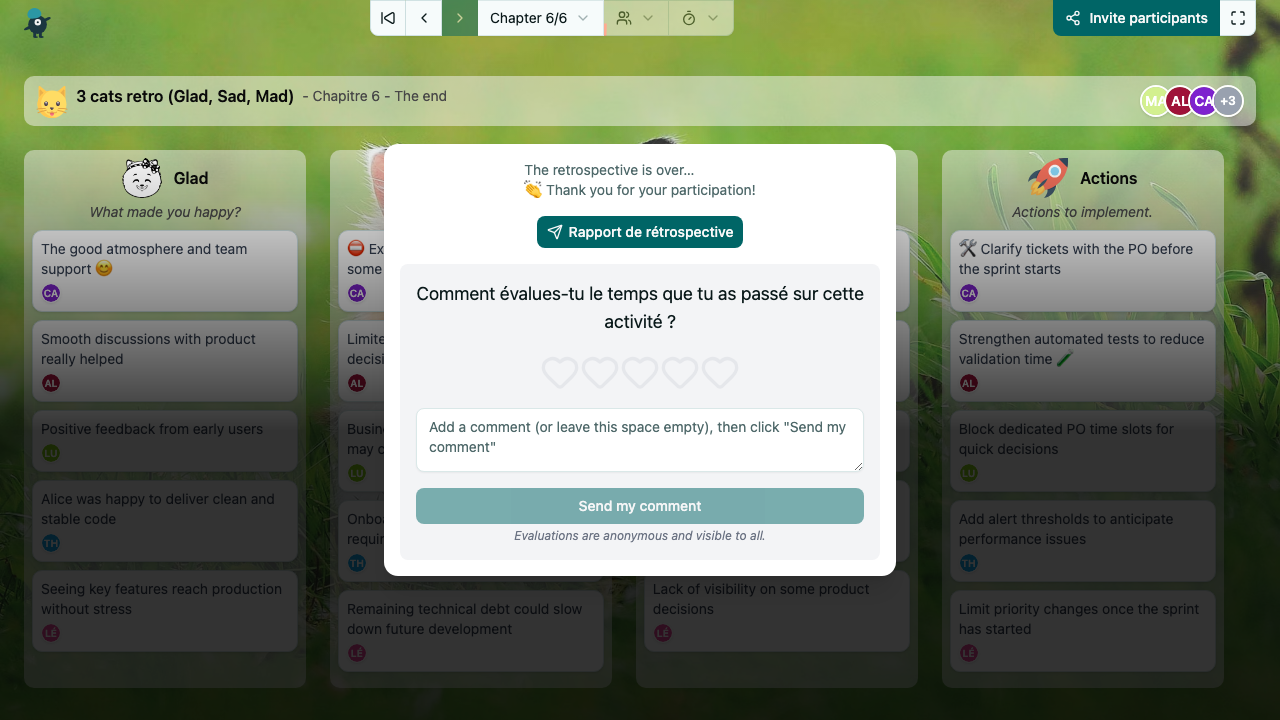
The 3 Cats Retrospective (Glad, Sad, Mad) is a classic and widely adopted retrospective format, known for its simplicity and emotional depth. The metaphor of three cats, each representing an emotion, makes the exercise more approachable and engaging.
Participants are invited to express themselves across three emotional dimensions:
- Glad 😺: What made you happy during this sprint? What moments, achievements, or interactions brought you joy or satisfaction?
- Sad 😿: What disappointed you or left you feeling unsatisfied? What could have gone better?
- Mad 🙀: What frustrated or annoyed you? What obstacles or situations created tension?
By using emotions as a framework, this format helps team members go beyond surface-level observations and connect with how they truly feel about the sprint. This emotional honesty leads to more meaningful conversations and deeper insights.
After sharing and voting, the team identifies concrete actions to amplify what makes them glad, address what makes them sad, and resolve what makes them mad.
Columns

Glad
What made you happy?

Sad
What made you sad?

Mad
What annoyed you?

Actions
Actions to implement.
Similar templates
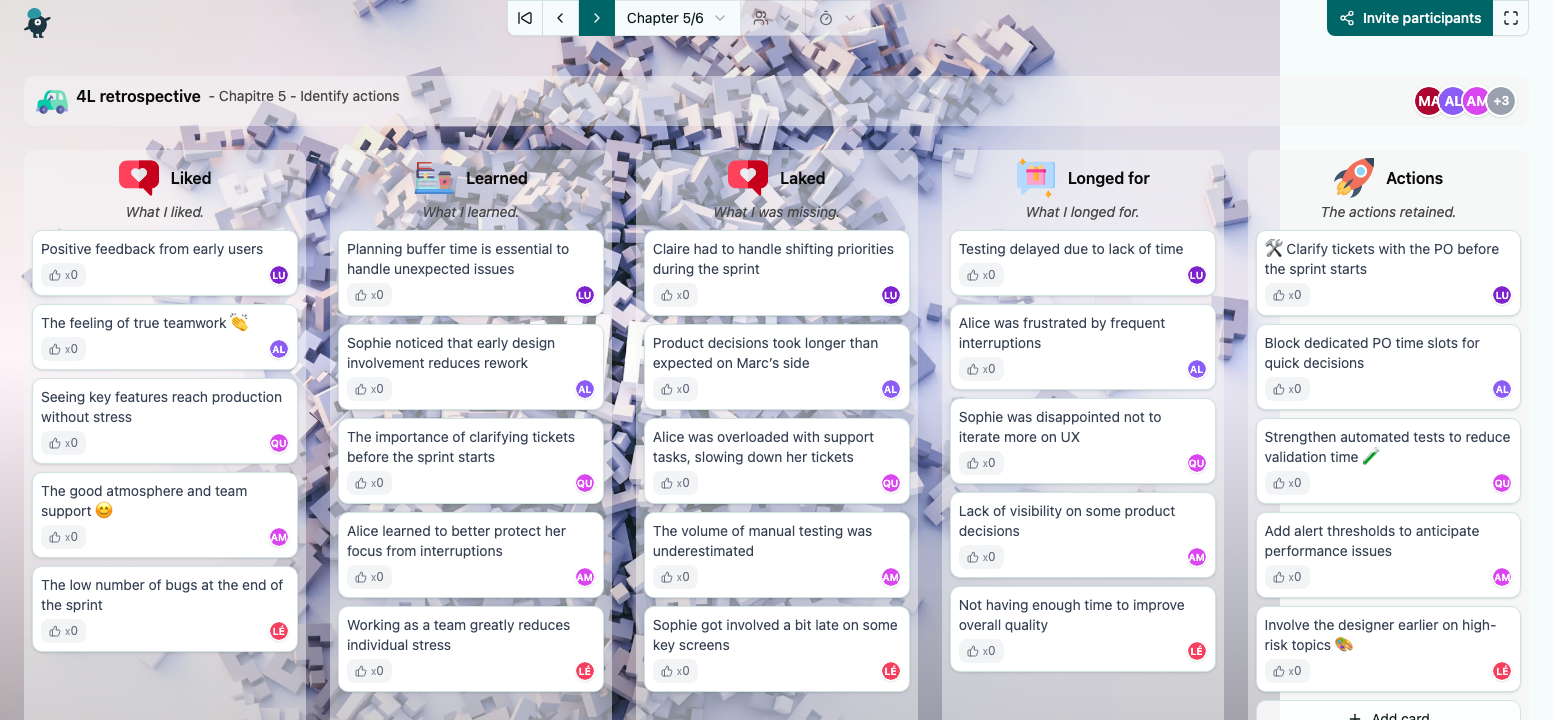

4L retrospective
The "4L" retrospective is a popular format that produces significant results for many teams. Here, 4 columns are displayed at the start of the activity and allow participants to reflect on what went well and what can be improved in the sprint.
Discover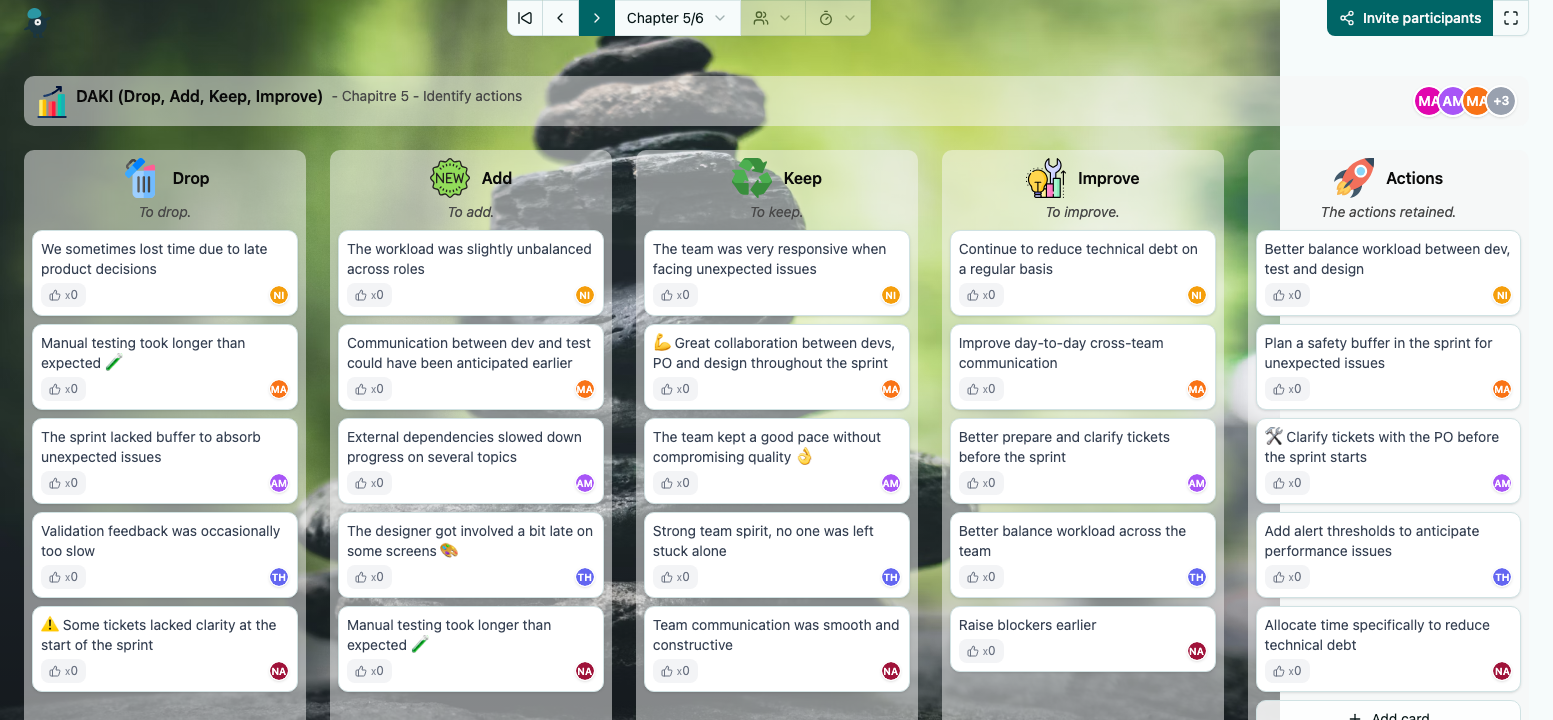

DAKI (Drop, Add, Keep, Improve)
DAKI is a classic retrospective format that fosters reflection on team practices and values. This format is recommended after the team has practiced scrum for several sprints. The team will then be better able to propose relevant changes.
Discover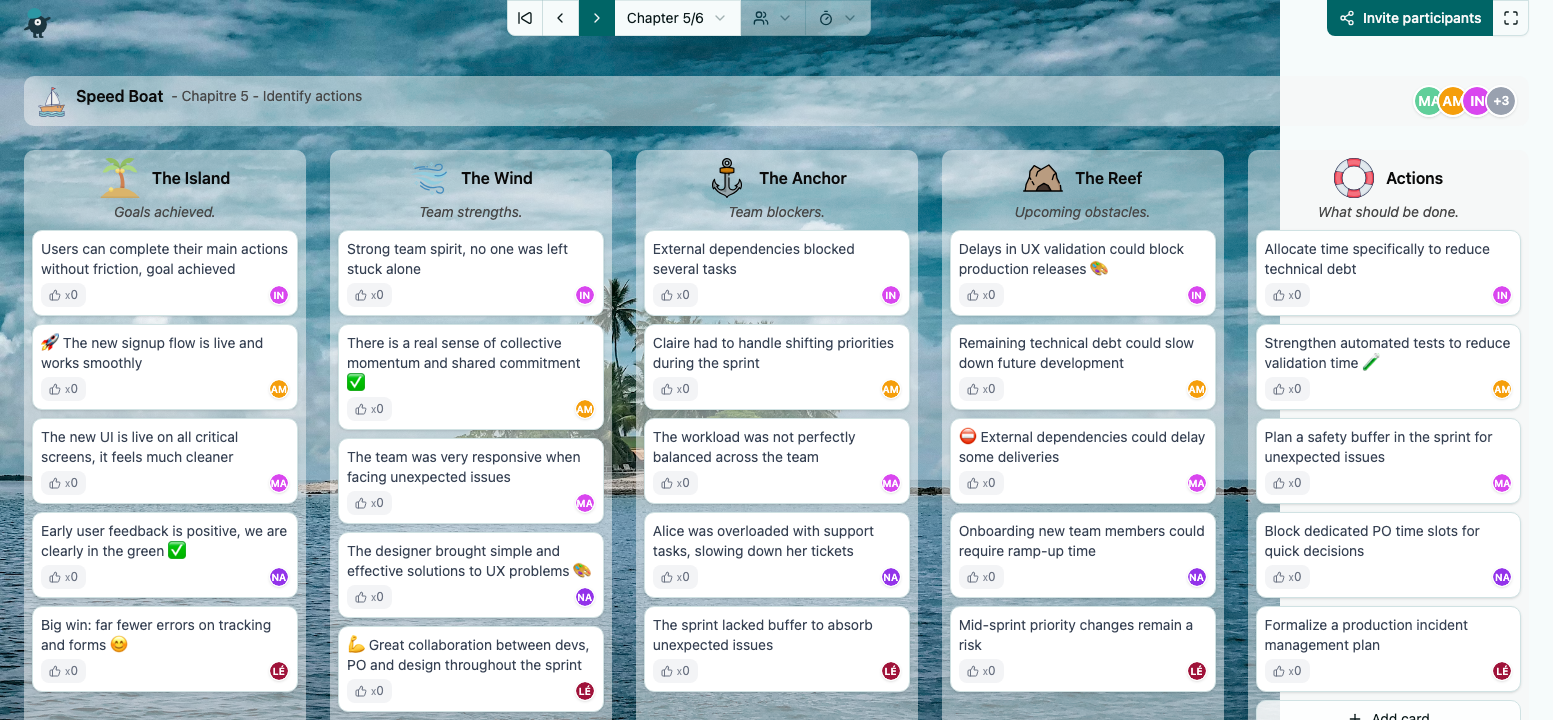

Speed Boat
One of the most popular retrospective formats. First published by Luke Hofmann in 2006 with the book Innovation Games: Creating Breakthrough Products Through Collaborative Play.
DiscoverReady to transform your retrospectives?
Try Umbreon free for 7 days. No commitment.
Start free trial